Living folio · Guilds
Mages Guild
The Mages Guild is not the largest institution in Versa. It is not the most numerous, the most visible, or the most accessible. Its members do not flood the city's streets the way Rangers Guild Hunters do, and they do not maintain the constant civic presence of the Guardians. In terms of raw headcount, the...
Overview
The Mages Guild is not the largest institution in Versa.
It is not the most numerous, the most visible, or the most accessible. Its members do not flood the city's streets the way Rangers Guild Hunters do, and they do not maintain the constant civic presence of the Guardians. In terms of raw headcount, the Mages Guild is one of the smallest professional institutions in Versa with any claim to genuine power.
And yet a single Mage changes the mathematics of a Tower party in ways that no other class can replicate.
The Mages Guild is Versa's most selective training institution: the organisation that identifies, cultivates, and certifies the rare individuals capable of shaping mana directly into force, heat, pressure, and destruction on demand. They do not produce adventurers in volume. They produce something considerably more valuable and considerably more difficult to manufacture: people who can do things that no amount of money, equipment, or physical training can otherwise provide.
A certified Mages Guild practitioner does not struggle to find work. They struggle to choose between offers. Guilds compete for them. Noble houses retain them. Military powers court them. And the Mages Guild, which controls the training, the certification, and the professional standards that make all of that value legible, sits at the centre of that competition with the particular composure of an institution that has never once needed to advertise.
They are exclusive because the class demands it. They are expensive because the market supports it. And they are powerful because the Tower, which grows denser with mana the deeper it goes, is an environment that rewards exactly what a Mage is built to do.
Origins and Purpose
The Mages Guild did not emerge from a single founding moment or a deliberate institutional design.
It emerged from a problem.
In Versa's early history, individuals with the rare natural attunement required to shape mana directly, those carrying the Mana Weaver passive that no amount of training could manufacture in its absence, operated without institutional framework. Some taught themselves. Some found private tutors. Some joined adventuring parties on the strength of raw talent and learned by surviving the consequences of their own mistakes. The results were inconsistent in ways that ranged from merely disappointing to catastrophically dangerous.
Unguided mana shaping in the Tower's pressure environment does not fail quietly. A Mage who does not understand what they are doing does not simply produce a weak effect. They produce an unstable one, and unstable mana effects in enclosed stone corridors with four party members in close proximity create problems that outlast the person who caused them. The early history of Versa's adventuring culture contains enough incidents of this kind that the institutional response, when it came, was driven as much by the desire to contain the danger as by the desire to develop the talent.
The Mages Guild formalised the identification, assessment, and structured training of mana-capable individuals. It built the theoretical framework that allowed natural talent to develop into reliable technique. It established the certification standards that told a party hiring a Mage what they were actually getting. And it created the relationship with the Mana Guild that gave its practitioners access to the tools and refined materials that the difference between a functional Mage and an exceptional one so often depends on.
The exclusivity came later, as a natural consequence of economics rather than deliberate policy. Training a Mage properly is expensive. The instructors required are themselves rare. The equipment and materials involved are not cheap. The time required is significant. When the Guild calculated what genuine Mage instruction actually cost and set its fees accordingly, the result was a programme that only a specific segment of Versa's population could access without exceptional circumstances.
The Guild has never apologised for this. It has occasionally provided scholarships, exceptions, and alternative entry paths for individuals whose talent is too significant to leave untrained regardless of their financial circumstances. But these are exceptions, and they are treated as such. The standard entry requirement is financial as much as it is natural, and the Guild considers both equally legitimate filters for the same outcome: a smaller, more capable, more carefully developed cohort of practitioners whose collective reputation justifies every coin the institution charges.
Symbol and Identity
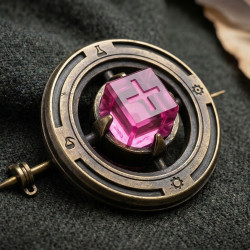
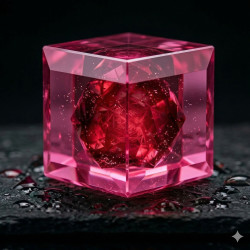
The symbol of the Mages Guild is a deep purple crystal orb with the silhouette of the Inverted Tower suspended within it.
The orb represents mana itself: concentrated, refined, contained within a form that gives it shape and direction rather than allowing it to dissipate freely into the environment. It is rendered in deep purple, a colour that sits at the boundary between the visible and the luminous, suggesting depth and internal light simultaneously. The surface of the orb is smooth and reflective. The interior carries the Tower's downward silhouette, small and precise, as if the dungeon has been captured and held within the mana rather than the other way around.
The meaning is deliberate. The Tower produces mana in quantities that the rest of the world cannot match. The Mages Guild does not fear that mana or flee from it. It contains it, shapes it, and makes it useful. The orb says: we have taken what the Tower produces and put it where we want it. That is the entire claim of the Mage class, rendered as an image.
The symbol appears on Guild documentation, the formal robes worn by certified practitioners at institutional functions, the entrance of the Mages Guild Hall, and the subtle marks carried on the personal equipment of active Guild members. It is not as ubiquitous as the Rangers Guild's bow or the Guardians' three swords. It does not need to be. The Mages Guild is not trying to be everywhere. It is trying to be unmistakable when it appears.
Guild colours run to deep purple and silver: the purple of concentrated mana and the silver of precise, refined control. Colours that suggest neither warmth nor aggression but a particular kind of cool authority that has nothing to prove and knows it.
The Mana Weaver Problem — Why Mages Are Rare
Before any discussion of the Mages Guild's structure or culture can be meaningful, one fact must be understood clearly.
You cannot train someone to be a Mage if they do not carry the Mana Weaver passive.
Mana Weaver is not a skill that can be purchased, practised into existence, or unlocked through sufficient dedication. It is a natural attunement between a person's soul and the mana that flows through the Tower and the world, a biological and spiritual compatibility that either exists or does not. Without it, no amount of instruction, equipment, or effort produces a functional Mage. With it, years of focused training can develop that attunement into genuine and sometimes extraordinary power.
The Mages Guild assesses for this passive before accepting any applicant regardless of their financial circumstances or social connections. The assessment process is conducted by senior Guild practitioners using methods the Guild does not publish in detail, and the result is binary: the attunement is present or it is not. Applicants without it are turned away regardless of how much they are willing to pay, how prestigious their family, or how earnestly they believe themselves capable.
This assessment is one of the few things the Mages Guild does entirely without charge. The Guild considers it a civic service. Identifying individuals who lack the attunement before they spend years and fortunes attempting to develop something their soul cannot carry is, in the Guild's view, a kindness rather than a rejection. The people who pass the assessment and then discover that the training costs more than they can afford are a different and more complicated problem. But at minimum, the Guild ensures they are not investing in an impossibility.
The practical consequence of this biological filter is that the pool of people who can become Mages is small, fixed by nature rather than policy, and distributed across Versa's population without regard for wealth, bloodline, or social standing. A dockworker's child can carry Mana Weaver. A noble heir can lack it entirely. The attunement does not discriminate.
The Guild's fees, however, do. And that tension between who can become a Mage and who can afford to be trained as one is one of the defining social realities of the institution and one of the more uncomfortable ones that the Guild's senior membership prefers not to examine too directly in public.
Entry — The Cost of Becoming a Mage
Gaining entry to the Mages Guild's training programme requires two things: the Mana Weaver attunement and the ability to pay the Guild's training fees.
The fees are substantial. Not prohibitively so for Versa's wealthiest families, but meaningfully so for the city's middle tiers and entirely out of reach for its lower ones without exceptional intervention. The Guild sets them at a level that covers the genuine cost of quality instruction and then somewhat above, because the margin funds the scholarship programme, the equipment provision for trainees who cannot afford their own, and the ongoing maintenance of the Guild Hall and its facilities.
The practical result is a trainee population drawn primarily from three sources.
Wealthy families who can pay without significant hardship and who understand that a certified Mage in the family is a commercial and social asset worth the investment many times over. Noble houses, successful merchant families, and the wealthier members of the Mana Guild's own senior ranks send their children to the Mages Guild when the attunement test comes back positive. These trainees arrive with financial security and sometimes with private tutoring already behind them. They are not always the most talented. They are reliably the most prepared.
Successful independent merchants and professionals who have accumulated enough wealth to afford the fees but for whom the cost represents a genuine sacrifice rather than a comfortable expenditure. These trainees tend to arrive with a specific and practical relationship to the investment they are making. They understand what they are paying for and they intend to see a return on it. The Guild's culture sometimes finds this pragmatism refreshing and sometimes finds it slightly uncomfortable.
Scholarship recipients: individuals whose attunement scores place them in the category the Guild's senior assessors designate as too significant to leave untrained. The scholarship programme is not generous in absolute terms. It covers fees and basic materials but does not provide living expenses or personal equipment allowances. Scholarship trainees often work part time in Guild support roles to sustain themselves during their training years. They arrive with the most to gain and the fewest resources to fall back on if something goes wrong. A disproportionate number of the Guild's most capable graduates came through this path, a fact the Guild acknowledges privately and does not advertise publicly because it raises questions about the fee structure that the institution finds inconvenient.
Training — What the Guild Actually Builds
Mage training in the Wayfinders Guild is long, technically demanding, and structured around a central truth that the Guild states plainly to every new trainee on their first day: the Mana Weaver passive is a beginning, not an achievement.
Having the attunement means the door is open. Walking through it, and developing what lies on the other side into something reliable and powerful enough to be worth what a party will pay for it, takes years of focused work that most trainees underestimate when they begin and understand completely by the time they finish.
Foundation Phase
The foundation phase covers the theoretical and practical basics of mana shaping: what mana is at a functional level, how the Tower's ambient mana environment differs from the surface, how personal mana reserves interact with external mana sources, and the fundamental techniques of mana threading, the basic act of pulling internal mana and giving it intentional shape outside the body.
Most trainees spend the first several months of this phase producing nothing visible at all. Mana threading is not a dramatic skill in its early stages. It is an internal discipline, the development of a sensitivity and control that does not yet have anywhere to go. Trainees who expect immediate results find the foundation phase profoundly humbling. Trainees who understand that they are building the architecture everything else will run on find it merely exhausting.
The Guild's instructors, all certified practitioners with significant Tower experience, are not gentle about this phase. The foundation either holds under pressure or it does not, and pressure is the only reliable way to find out. Foundation phase trainees are pushed into conditions that stress their developing control before they feel ready, because readiness in comfortable conditions means nothing in the Tower.
Discipline Discovery
Once foundation technique is stable, trainees enter the phase the Guild calls discipline discovery: the process of identifying what kind of Mage a given trainee is going to be.
The Mage class does not produce generalists. It produces specialists, individuals whose natural attunement orients toward a specific expression of mana shaping: heat, force, arc, pressure, light, cold, and other disciplines that experienced practitioners have mapped and named over generations of Tower work. The discipline is not entirely chosen. It is partly discovered, as the trainee's developing technique reveals which directions their shaping naturally wants to move and which directions it resists.
Instructors observe this process carefully. Forcing a trainee toward a discipline that their attunement does not support produces mediocre results at best and dangerous instability at worst. The Guild's approach is to create conditions in which the natural discipline emerges and then build the training program around what actually appears rather than what the trainee or their family hoped for.
This sometimes produces disappointment. A family that paid for a combat Mage and receives a specialist whose natural discipline runs toward light manipulation or structural pressure work does not always receive the news gracefully. The Guild handles these conversations with the particular directness of an institution that has had them many times before and has learned that softening the truth does not improve the outcome.
Advanced Development and Certification
The advanced phase is where trainees become practitioners: where the discovered discipline is deepened, refined, and developed into something that can be deployed reliably under Tower conditions, in a mixed party, against targets that are trying to prevent it from working.
This phase includes mandatory Tower descents under Guild supervision, conducted in the upper floors with experienced practitioners present. The descents are not primarily about combat experience, though combat experience is an inevitable component. They are about learning what it feels like to shape mana in the Tower's pressure environment rather than in the Guild Hall's controlled conditions, and developing the Resonance management that keeps a Mage's output stable when the ambient mana around them is doing things the training range never prepared them for.
Certification requires demonstrating consistent, reliable, controlled deployment of the trainee's discipline under genuine Tower conditions, assessed by a panel of senior practitioners who are looking for the specific quality that separates a trained Mage from a talented one: the ability to perform correctly when everything is wrong.
The Mana Guild Relationship — Tools of the Trade
The Mages Guild maintains a closer working relationship with the Mana Guild than with any other institution in Versa, and the relationship is built on a straightforward mutual dependency.
Mages need tools. Not to substitute for their personal mana shaping, but to support, extend, and stabilise it. Mana-fed focusing instruments that improve pattern precision. Refined stone feeds that supplement personal reserves during extended engagements. Stabilising equipment that reduces the Resonance demand of sustained output. Channelling devices that allow a Mage to maintain multiple patterns simultaneously without the cognitive load of managing each one independently.
These tools are produced by the Mana Guild, refined from the same stones the Tower produces, and made available to Mages Guild practitioners at preferential rates through a standing commercial arrangement that both institutions renew without significant negotiation because both benefit from it too clearly to let it lapse.
The Mana Guild values the relationship for the same reason it values any arrangement that improves the efficiency of mana stone consumption: more Mages operating with better tools means more mana stones used, which means more demand for Mana Guild products, which means more revenue. The fact that the tools also make Mages more effective in the Tower, increasing their survival rates and therefore the longevity of their careers as stone consumers, is additional commercial incentive that the Mana Guild's analysts have modelled in considerable detail.
The Mages Guild values the relationship because the alternative is purchasing tools on the open market at standard rates, which is manageable but significantly more expensive than the preferential arrangement. The Guild's scholarship programme in particular depends on the Mana Guild's preferential pricing for equipment provision to trainees who cannot fund their own kit. Without that pricing, the scholarship programme would be considerably smaller.
The two institutions are not close in the way that suggests genuine affinity. They are close in the way that two organisations whose interests align precisely enough to make regular cooperation more profitable than independence tend to be. Functional, sustained, and not particularly warm.
Structure and Leadership
The Mages Guild is led by an Archmage: a single head of institution elected by the Guild's certified senior practitioners, those who hold full Guild certification and have maintained active membership for a defined minimum period, whenever the position becomes vacant through death, resignation, or a formal vote of no confidence by the same electorate.
The election process is not rapid. Senior practitioners are not easily herded into agreement, and the qualities required to lead the Mages Guild, technical authority sufficient to command the respect of exceptional people, administrative capability sufficient to run a complex institution, and political skill sufficient to manage the Guild's relationships with the other major powers of Versa, are not commonly found in the same person. The process of finding someone who has all three in adequate measure sometimes takes months.
Below the Archmage, the Guild organises around two structures.
The Instruction Council is composed of the Guild's senior instructors: experienced practitioners who have transitioned from active Tower work into teaching. They design and oversee the training programme, assess trainees at each phase transition, conduct the certification panels, and maintain the academic standards that give Guild certification its value in the market. The Instruction Council has significant internal authority over training decisions and considerable influence over admissions, including scholarship allocation.
The Practitioner Registry is the administrative body that manages Guild membership for certified practitioners: tracking active members, managing the fee structures for ongoing certification, maintaining the professional conduct standards that the Guild enforces among its members, and handling the formal relationships with external parties who wish to hire Guild-certified Mages through official channels. The Registry is staffed primarily by administrative professionals rather than practitioners, which is occasionally a source of friction with members who feel that non-practitioners should not be administering their professional affairs, and consistently necessary because experienced Mages are not drawn to administrative work and the Guild functions better when it accepts this rather than fighting it.
Membership and Culture
The Mages Guild's culture is shaped by the combination of its small size, its high individual value, and the specific psychological profile that the Mage class tends to produce.
People who carry the Mana Weaver passive and develop it into functional power tend to be aware, from relatively early in their lives, that they are unusual. The attunement makes itself known before training formalises it, as a sensitivity to mana environments, an instinctive response to the Tower's ambient pressure, a quality of perception that other people around them do not share. By the time a Mage completes Guild certification, they have spent years in an institution that has consistently reinforced the message that what they can do is rare, valuable, and difficult to replace.
This produces a culture that is, in its best expressions, quietly confident and rigorously self-critical, and in its worst expressions, quietly arrogant and tolerant of poor behaviour from people whose capabilities excuse it. The Guild's Instruction Council spends a meaningful portion of its attention managing the latter tendency, with mixed results.
What the culture genuinely rewards, consistently and across all its internal variations, is technical excellence. A Mage whose discipline is deep, whose control is precise, and whose Tower performance is reliably extraordinary commands respect within the Guild that social connections, family wealth, and personal charm do not substitute for. The Guild's small size means that everyone knows what everyone else is actually capable of, and pretence does not survive that kind of proximity.
The Guild also has a strong culture around Resonance management and personal safety: the understanding that a Mage who burns out their reserves, destabilises their Resonance through overextension, or takes foolish risks in the Tower's deeper pressure zones is not being brave. They are being wasteful. Exceptional practitioners are too valuable and too difficult to produce to be lost to preventable decisions, and the Guild's culture treats self-preservation not as cowardice but as professional responsibility.
Social and Economic Position
A certified Mages Guild practitioner occupies a social and economic position in Versa that no other adventuring class quite matches.
Their hire rates are the highest of any class in the city, often dramatically so. A party that secures a Guild-certified Mage for a Tower contract is not simply adding a damage dealer. They are changing what contracts they can reasonably attempt, what floors they can operate on effectively, and what their survival probability looks like in engagements that would otherwise require either avoiding or accepting significant casualties. The market prices this accurately. Mages know what they are worth and the Guild's certification system ensures that parties hiring them can trust that the price reflects genuine capability.
This economic position makes certified Mages a target for recruitment by interests beyond the Tower. Noble houses retain them as assets. Military powers court them for applications that have nothing to do with dungeon extraction. The Mana Guild itself occasionally attempts to hire senior practitioners for research and development roles. The Mages Guild maintains professional standards around these arrangements: members who take external contracts that conflict with their Guild obligations or that bring the institution's reputation into question face consequences that the Guild enforces seriously.
The Guild also maintains strict standards around the behaviour of its members toward the parties that hire them. A Mage who performs poorly on a contract without legitimate cause, who abandons a party mid-descent, or who uses their Guild certification to extract payment for services not rendered finds themselves before the Registry's conduct board with a speed and seriousness that reflects how much the institution's commercial value depends on its reputation for reliability.
Relationship with Other Guilds
The Mages Guild's relationships with other institutions are defined by the particular leverage that genuine scarcity provides.
The relationship with the Mana Guild is the most structurally significant, built on the tool supply arrangement and maintained with the consistent mutual benefit that makes renegotiation unnecessary. The two institutions interact regularly at the senior level and maintain a working relationship that is professionally close without being personally warm.
The relationship with the Guardians Guild is formally correct and practically straightforward. Mages register their adventurer cards and process their loot sales through the Checkpoints like everyone else. The Guardians treat certified Mages with the same procedural consistency they apply to everyone, which Mages sometimes find surprising and the Guardians consider unremarkable.
The relationship with the Rangers Guild is one of mutual professional respect without significant overlap. Hunters and Mages operate very differently in the Tower but complement each other effectively in mixed parties, and both institutions understand the value of that complementarity without needing to formalise it.
The relationship with the Wayfinders Guild is the most commercially active outside the Mana Guild connection. Senior Mages are among the Wayfinders' most consistent VIP tier clients, purchasing deep floor intelligence before any serious descent with the particular thoroughness of people who understand exactly what the difference between good information and bad information costs in the Tower's lower levels.
The relationship with the Saint Guild is one of careful mutual respect. Mages and Priests occupy different power categories and rarely compete for the same role, but both institutions are aware that the other controls something that the Tower economy values highly, and neither has any interest in making an enemy of the other without cause.
Public Perception
The Mages Guild is viewed by Versa's general population with a combination of awe, envy, and the particular resentment that attaches to exclusivity that is perceived as partly arbitrary.
The awe is straightforward. What a Mage can do in the Tower is genuinely extraordinary, and stories of Guild-certified practitioners reshaping the outcome of difficult contracts circulate through the city's adventuring community and beyond it. People who have never descended know what a Mage is capable of because the stories are compelling enough to travel.
The envy is equally straightforward. Many people in Versa know, or suspect, that they might carry the Mana Weaver attunement and will never find out because they cannot afford the assessment to mean anything even if it comes back positive. The Guild's scholarship programme is not a secret, but it is not large, and the gap between who can become a Mage by nature and who can afford to be trained as one is visible enough that people notice it.
The resentment concentrates around the fee structure. The argument that quality instruction is genuinely expensive is accurate and not always persuasive to someone whose child tested positive for Mana Weaver attunement and cannot access what that means without financial resources they do not have. The Guild manages this perception with the awareness that it is a real tension rather than a misunderstanding, and with the institutional honesty to acknowledge it without changing the underlying structure in any significant way.
Among the adventuring community, the Guild's reputation is one of reliable, extraordinary value. A party that can afford a Guild-certified Mage does not question whether the cost is worth it. They question whether they can maintain access to the same Mage for the next contract, which is a different and more pressing concern.
Quick Descriptive Lines for Prose
- "The purple orb with the Tower inside. It said: we took what the dungeon produces and put it in our hands. The Guild had never felt the need for a more elaborate statement than that." - "Anyone could learn to fight. Almost no one could learn to do what they did. The Guild charged accordingly." - "The assessment was free. Everything after it cost considerably more than most people were comfortable with." - "A certified Mage didn't look for work. They chose between offers. The Guild had built an institution around making sure those offers kept coming." - "She had the attunement. Her family did not have the fees. The scholarship board met four times a year. She applied twice before they said yes." - "The Mana Guild sold them the tools. The Mages Guild decided what to do with them. The arrangement had worked for long enough that neither institution remembered a time before it." - "Most adventuring parties never worked with a certified Mage. Those that did found it very difficult to go back to doing without one." - "They were small in number and large in consequence. In the Tower, that turned out to be the most valuable combination possible." - "A Mage who burned out their Resonance chasing glory was not brave. They were expensive to replace and the Guild treated the loss accordingly." - "You didn't hire a Mage to fill a role. You hired a Mage to change what your party was capable of. The difference in price reflected the difference in outcome."
Connected records