Living folio · System
Dungeon System
The Inverted Tower — Dungeon System Codex A Complete Mechanical Reference for Writers 1. What the Tower Actually Is The Inverted Tower is not a static dungeon. It is not a cave system, a ruin, or a natural formation that happens to contain monsters. It is a living dimensional structure that generates,...
The Inverted Tower — Dungeon System Codex
(A Complete Mechanical Reference for Writers)
- What the Tower Actually Is
The Inverted Tower is not a static dungeon. It is not a cave system, a ruin, or a natural formation that happens to contain monsters. It is a living dimensional structure that generates, resets, and defends itself on a cycle no one fully understands and everyone has learned to work around.
The most important thing to understand about the Tower is this: it is not one place. It is a pocket universe that produces a new version of itself every three weeks, complete with new corridors, new monster distributions, new stair placements, and new routes between floors. The physical opening at the surface — the great circular abyss at the heart of Versa — never changes. What lies beneath it does, constantly and without warning.
This is why adventurers die. Not always because the monsters are too strong. Often because the route they memorised last week no longer exists.
- Dimensional Instancing — How the Tower Resets
Every *three weeks, the Tower generates a completely new internal layout. This is called a new instance* — each one a self-contained pocket universe, distinct from every instance that came before it. The corridors, staircases, monster distributions, and route connections are not rearranged. They are replaced entirely. The new instance is not the old Tower reshuffled. It is a new Tower that happens to occupy the same surface opening.
In Versa and among adventurers, this event is commonly called the *Topology Shift* — the name came first, invented by people who experienced the layout changing without understanding why, and it stuck. The term is accurate enough for practical use. Maps go stale. Routes disappear. What was safe last week is unknown this week. Whether people think of this as the Tower rearranging itself or as a new Tower replacing the old one, the operational consequence is identical: you need current information or you are navigating blind.
The dimensional mechanics are not publicly understood. The Wayfinders Guild has more working knowledge of instance behaviour than any other institution, and they have never published what they know about why instances exist rather than simple reshuffling. The prevailing street explanation — that the Tower breathes, or resets, or grows — is close enough to true that correcting it has never seemed worth the effort.
What Changes With Each Instance
- Staircase locations between floors - Corridor connections and room arrangements - Monster spawn distributions - Warden Room active locations (see Section 5)
What Never Changes
- The number of floors - The existence of Rest Areas every five floors - The existence of thirty Warden Rooms at each ten-floor threshold - The fundamental theme and architecture of each five-floor band - The surface entrance and its Entrance Anchors
Entrance Anchors (Surface)
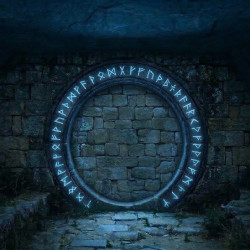
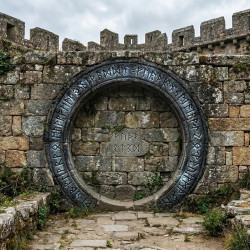
Located along the rim of the Tower's opening, embedded in the ancient stone of the circular wall that surrounds the abyss. There are hundreds of them. - Always tuned to the latest instance - Free to use for entry (no mana stone cost to descend) - Follow a one-minute activation window: once the first person passes through, a one-minute window opens. Additional party members must enter within that minute. After five people have passed through, or the minute expires, the Anchor closes and enters a five-minute cooldown before reactivating - Naturally suited to five-person parties
Exit Anchors (Extraction)
Located in every Rest Area, at every fifth floor. These are the primary extraction mechanism for the entire adventuring economy. - Locked to the instance they were entered from - Carry a fifteen-minute cooldown between activations - Transport a maximum of five people per activation via a one-minute window - Require mana stones to activate, cost scales with floor depth - Cannot be destroyed or relocated - Always wall-mounted in a dedicated chamber, never floor or ceiling
For full mechanical detail see the *Exit Anchors* codex entry.
Rest Anchors (Downward Transit)
Located in every Rest Area, ten per floor. These are the standard downward transit mechanism replacing staircase navigation between floor bands. - Free to use, no mana stone cost - Activation identical to Entrance Anchors: one-minute window, five-person cap - Five-minute cooldown per individual Anchor after use - Ten available simultaneously, making congestion rare - Deposit parties at a random arrival point among one hundred locations on the next floor band's first floor - Cannot be used for upward transit - Cannot be destroyed or relocated*
For full mechanical detail see the *Rest Anchors* codex entry.
Temporary Anchors (Emergency Extraction)
Portable runic devices that can be carried into the Tower and activated at any point on any floor, regardless of proximity to a Rest Area. - Cost: Three times whatever the nearest Rest Area Anchor activation would cost at that depth - Single use: Burns out after transporting one party of up to five people, fusing permanently with the floor surface and becoming inert - The fused ruin of a Temporary Anchor remains visible on the floor afterwards — a permanent mark that someone once needed to escape badly enough to pay for it - Carried exclusively by wealthy guilds running deep expeditions where the distance to the nearest Rest Area represents an unacceptable risk - Not practical for standard operations at any depth
- Rest Areas — The Only Safe Ground
Rest Areas exist at every fifth floor (Floor 5, Floor 15, Floor 25, and so on). They are the only locations in the Tower where monsters cannot exist. Any monster that crosses into a Rest Area is immediately absorbed by the floor — not killed, not stunned, simply erased from the space without residue or warning. This effect is instant and without exception.
This absorption rule is also what prevents monsters from migrating between floor bands. A monster from Floor 4 can ascend to Floor 1 by navigating staircases, and a monster from Floor 6 can descend to Floor 9, but no monster can cross through a Rest Area. The absorption barrier makes each five-floor band a contained ecosystem with no crossover.
Rest Areas are permanent and identical across every instance. When the Tower resets its internal topology every three weeks, Rest Areas do not change. Their architecture, dimensions, and every fixed feature reset to exactly what they always were. Damage inflicted in one instance does not carry into the next. The room is always the same room.
What the Tower does not control is what people bring into that room. Guilds and merchants transport tents, furniture, stalls, equipment, and supplies down through the upper floors to establish commercial operations inside Rest Areas. None of that is part of the Tower's architecture. When an instance resets, those brought-in items do not vanish — they are carried back to the surface by the people who own them and brought down again into the new instance. The Rest Area itself resets. Everything inside it that did not belong to the Tower in the first place does not.
Every Rest Area contains permanent fixtures that the Tower placed there and that no instance reset changes.
The *Exit Anchor* is wall-mounted in a dedicated chamber, always behind a portcullis or heavy doorway separating it from the main space. It allows extraction to the surface following standard rules: one-minute window, five-person cap, fifteen-minute cooldown, mana stone cost scaling with depth.
The *ten Rest Anchors* are distributed across the Rest Area's walls, each marked with a directional glyph. They allow downward transit to the next floor band at no mana stone cost, depositing parties at a random arrival point among the one hundred starting locations on the next floor band's first floor. Rest Anchors activate identically to Entrance Anchors: the first person through opens a one-minute window for up to four additional people to follow, after which the specific Anchor used enters a five-minute cooldown. With ten available simultaneously, congestion is not a meaningful problem.
The monster dissolution field that makes Rest Areas safe is the same field that prevents creatures from entering active Warden Rooms. Rest Areas are Warden Rooms. Nobody in Versa knows this.
The Anchor systems are also covered in their own dedicated codex entries: *Exit Anchors, Rest Anchors, Entrance Anchors, and Warden Anchors*
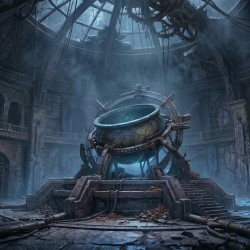
For a detailed description of what any specific Rest Area looks like, what commercial infrastructure has developed inside it, and what social rules govern behaviour within it, see the individual floor entries — beginning with 015 | Mana Cauldron Chamber for the first and most heavily trafficked Rest Area in the Tower.
- Wardens — The Tower's Gatekeepers
Every ten floors, the Tower places a barrier. There are no staircases leading past Floor 10, Floor 20, Floor 30, and so on without first passing through what the city calls a Warden threshold — a band of specially constructed rooms that each contain a potential Warden encounter.
The Warden Room Structure
At each ten-floor threshold, there are exactly thirty Warden Rooms arranged across the floor. These rooms are immediately distinguishable from standard dungeon chambers — the doors are enormous, standing roughly four metres tall, constructed from a material so dense and robust that no known force available to adventurers can damage, blow open, or remove them. Attempting to do so does not simply fail. It breaks the room's internal system entirely: the Anchors inside stop functioning and the passage downward from that room becomes permanently blocked. The doors are not an obstacle to overcome. They are the architecture of the encounter itself.
At any given time, exactly ten of those thirty rooms contain an active Warden. The other twenty are empty and their doors stand open. Active rooms are identified by a Blue Lantern mounted above the door — a permanent fixture that the Tower itself illuminates when a Warden has been assigned to that room.
Unlit Rooms — Safe to Scout
Any Warden Room without a Blue Lantern is empty and safe to enter. Scouts and parties can freely walk into unlit rooms, examine them, rest in them, or use them as temporary shelter without triggering anything. Nothing happens in an unlit room. There is no boss, no door sequence, and no consequence for entering.
However, the Tower assigns new Wardens to unlit rooms on its own schedule. The moment the Tower assigns a Warden to a room, two things happen simultaneously and cannot be separated: the Blue Lantern activates above the door and the door closing sequence begins. This means that a scout already inside an unlit room when it receives a Warden assignment is immediately committed — the doors begin closing around them regardless of their intent or awareness. The Tower does not distinguish between a party that entered deliberately and a scout who was simply in the wrong room at the wrong moment.
How Warden Encounters Work
When a party approaches a lit Warden Room and the first person steps through the door, the door closing sequence begins. The doors are so heavy and move with such mechanical certainty that nothing can meaningfully slow or interrupt them. Any object, weapon, or body part caught in the frame as the doors close will be crushed or forced fully inside — attempting to hold the doors open is not a viable tactic and the doors do not register the attempt. They close regardless.
The sequence is as follows: 1. First person crosses the threshold — door closing sequence begins immediately 2. The doors take approximately thirty seconds to close fully — during this window any number of additional people can enter the room freely, there is no cap on how many enter, and parties who coordinate well can get their full group inside before the doors seal 3. Once the doors are fully closed, the Warden emerges from the walls of the room — not charging from a corner, not dropping from the ceiling, but growing outward from the stone itself as though the room is producing it 4. The fight happens 5. The room is large enough to comfortably hold the Warden and at least three full parties of five simultaneously — movement becomes difficult with large numbers of people present but the Tower does not prohibit it
Leaving Before the Doors Close
If every person inside the room exits before the doors fully close, the Tower detects the absence of life and cancels the sequence. The doors stop closing and return to their open position. The Blue Lantern above that room deactivates and the Tower immediately assigns that active slot to a different unlit room elsewhere on the floor, where a new Blue Lantern activates. The party that entered and left has lost their opportunity — that specific room will not reactivate, and the Warden they triggered has moved on.
This means hesitation is punished. Entering a lit room is a commitment. Parties that are not prepared to fight should not cross the threshold.
If the Party Dies
If the Warden kills every person inside the room the following sequence occurs: 1. The Warden is recycled by the Tower — absorbed back into the walls without dropping loot of any kind, including its mana stone 2. Once the Warden is fully recycled the doors open 3. The bodies of the dead party and all of their equipment remain exactly where they fell and can be freely looted by anyone who enters afterward 4. The room does not reactivate — it does not receive a new Blue Lantern unless by coincidence the Tower independently assigns a new Warden slot to that room in a future cycle 5. The active Warden count on that floor drops by one temporarily until the Tower assigns a replacement to a different unlit room, maintaining the ten active room count across the floor
The permanent loss of all equipment and loot on a party wipe makes Warden Rooms among the most consequential spaces in the Tower. The bodies can be looted by anyone — this creates the darkest edge of the dungeon economy, where unscrupulous parties watch for wipes and move in immediately after the doors open.
If the Party Wins
When the Warden dies: 1. The standard one-hour recycling window begins on the Warden's corpse — the party has one hour to harvest before the body is absorbed 2. A Warden Anchor activates on the wall of the room — a free connection to the next floor band requiring no mana stones, following the same one-minute window and five-person cap as all other Anchors. 3. An Exit Anchor activates simultaneously — allowing extraction to the surface at the standard depth-scaled mana stone cost. The Warden's defeat earns passage downward. Passage back to the surface costs the same as it always does. 4. The doors remain sealed for as long as at least one living person remains inside the room — no one outside can enter and the victorious party cannot be interrupted during harvest or rest 5. The moment the last living person leaves through either Anchor the doors unseal, both Anchors deactivate, and the room becomes an ordinary empty chamber
The victorious party controls their own timeline entirely. They can harvest at leisure within the one-hour recycling window, rest, use the Exit Anchor to extract, or proceed through the Warden Anchor to the next floor band. The sealed doors are their protection. The recycling clock is their only pressure.
The Active Room Count
The Tower maintains exactly ten active Warden Rooms at all times through the following logic: - When a Warden is killed and its room seals around the victorious party, that room remains counted as active until the last person leaves — at which point it deactivates and the Tower lights a new room elsewhere - When a party wipes, the room deactivates immediately once the Warden is recycled and the Tower lights a new room elsewhere - When a party enters and leaves before the doors close, the room deactivates immediately and the Tower lights a new room elsewhere - The Tower's replacement is not instantaneous — there is a brief window of seconds between one room deactivating and a new Blue Lantern appearing elsewhere, but this window is short enough to be functionally imperceptible to anyone not watching all thirty rooms simultaneously
Guild Economy Around Wardens
Because active rooms are identifiable only by their Blue Lanterns and the Tower randomises which rooms are active, a commercial ecosystem has developed around Warden location knowledge.
Intel Sales: Knowing which rooms currently have a Blue Lantern saves search time on a floor that may have thirty rooms spread across significant distance. Guilds that station scouts at threshold floors sell this information to parties who want to skip the search.
Escort Services: A guild can offer to lead a party to a known active room through the monsters that roam the threshold floor. The escort ends at the door. What happens inside is the client's problem entirely.
Access Fees: A guild positioned at a known active room can charge parties for the right to approach it. They are selling location knowledge and safe passage to the door, not a guarantee of survival and not control of what happens inside. Once a party crosses the threshold the doors close and the guild outside has no further involvement or leverage.
What No One Can Control: The Tower's randomisation ensures that hoarding Warden access is functionally impossible at scale. A mercenary group can control one known active room. They cannot control where the next Blue Lantern appears after that room is spent. Other parties can always search for their own active rooms independently, and the thirty-room spread across a threshold floor means that locating an active room through searching is a realistic alternative to paying for the information.
- Monster Behaviour and Recycling
How Monsters Move Between Floors
Monsters are not confined to single floors. A creature on Floor 4 can descend to Floor 1 by navigating the same staircases adventurers use. A creature on Floor 6 can ascend to Floor 9. What they cannot do is cross a Rest Area. The absorption effect is absolute and instantaneous — a monster that steps into a Rest Area ceases to exist in that space without drama or residue.
This creates natural containment. Each five-floor band is a closed ecosystem. The monsters of Floors 1 through 4 and those of Floors 6 through 9 never interact. They develop independently within their bands, and the Rest Area between them is an uncrossable barrier maintained not by guards or walls but by the Tower's own mechanics.
Recycling
When a monster dies, the Tower begins reclaiming it. This process takes approximately one hour from the moment of death. During that hour, the corpse is fully available for harvesting — hides, claws, glands, bones, alchemical components, and most importantly, the rough mana stone at its core. After the hour expires, the body is absorbed back into the floor and walls, leaving nothing.
A monster that dies inside a Rest Area is absorbed instantly upon touching the floor. There is no harvest window. This is not a meaningful loss in practice because monsters cannot enter Rest Areas alive — they are absorbed the moment they cross the boundary regardless of their condition.
What Can Be Removed From the Tower
Everything physical that an adventurer can carry can be brought to the surface. Monster components, mana stones, plants growing in the Tower's floors, water from underground springs, any object found abandoned in the dungeon — all of it can be extracted.
The practical filter is economic rather than mechanical. No rule prevents an adventurer from spending an hour chipping stone from a dungeon wall and hauling it to the surface. The Tower imposes no restriction on this. What imposes the restriction is the cost of that time and effort compared to what the stone is worth on the surface market, which is essentially nothing. Mana stones are worth hauling. Monster materials are worth hauling when properly harvested. Everything else is weight that slows a party down and reduces the time available for actual extraction.
- Navigation
Compasses and Maps
Compasses function correctly inside the Tower. They point accurately to magnetic north on every floor without distortion from the ambient mana. This is useful precisely as long as a party has a map accurate to the current instance. Without a current map, a compass tells a party which direction north is inside a layout they do not recognise, which is only marginally more useful than no compass at all.
Maps are the real navigation tool. A map produced during the current instance, by scouts who walked the routes and confirmed the staircase connections, is one of the most valuable commercial products in the Tower economy. The Wayfinders Guild's business model exists entirely because maps expire every three weeks and parties cannot safely navigate without them.
The Practical Result
Experienced parties develop a working understanding of how the Tower tends to arrange itself within each five-floor band — the general logic of its architecture, the typical relationship between staircase depth and corridor complexity, the patterns that suggest a route is leading somewhere useful versus looping back. This knowledge does not replace a current map. It supplements one, allowing experienced adventurers to make better decisions when the map runs out or proves inaccurate in a specific detail.
New adventurers navigate Floor 1 through 4 by feel, rumour, and whatever crude sketch they purchased at Floor 005. Most of them survive. The ones who do not usually made the mistake of treating an old map as a current one.
Connected records