Living folio · System
Rest Area System
Rest Areas are the only safe locations inside the Inverted Tower. They exist at every fifth floor — Floor 5, Floor 15, Floor 25, and so on — and they share one property that nothing else in the Tower possesses: monsters cannot survive inside them . Any creature that crosses the boundary of a Rest Area is...
Overview
Rest Areas are the only safe locations inside the Inverted Tower. They exist at every fifth floor — Floor 5, Floor 15, Floor 25, and so on — and they share one property that nothing else in the Tower possesses: *monsters cannot survive inside them*.
Any creature that crosses the boundary of a Rest Area is absorbed by the floor instantly and without residue. Not killed in any conventional sense. Simply erased from the space. A goblin that wanders through the wrong corridor and steps across the threshold ceases to exist in that room without drama or warning. The effect is instantaneous, it applies to every creature without exception, and it has never been observed to fail.
This is what makes Rest Areas the foundation of the entire adventuring economy. Without them, there is no safe extraction point, no place to resupply, no commercial infrastructure, and no reliable way to bring anything out of the Tower. Everything else that happens below the surface — the descents, the hunts, the Warden fights, the map-making, the hauling — is organised around the fixed points that Rest Areas provide.
What Nobody in Versa Knows
Rest Areas are Warden Rooms.
The same field that dissolves monsters inside a Rest Area is the same field that prevents creatures from entering an active Warden Room during a fight. Without it, monsters could wander into a sealed Warden Room mid-encounter, camp the entrance, or shelter inside an empty room and wait for parties to arrive. The Tower does not permit this. The dissolution field applies to every room that carries the Warden designation — which includes every Rest Area on every fifth floor.
The people of Versa have no name for this connection. They know Rest Areas are safe. They know Warden Rooms seal during a fight. They have never connected the two facts into a single mechanism because nothing in their experience has ever forced them to. The Tower does not explain itself, and the question of why Rest Areas dissolve monsters has never produced an answer that satisfied anyone enough to stop asking.
What Never Changes
Rest Areas are permanent fixtures of the Tower in a way that nothing else is. When a new instance generates every three weeks and the Tower reshuffles its corridors, staircases, and monster distributions, Rest Areas do not move. They do not change shape. Their architecture, dimensions, and permanent features reset to exactly what they always were.
Damage done to a Rest Area in one instance does not carry into the next. A wall that was broken is intact again. A floor that was scorched is clean stone. The next instance presents the same room, unchanged, as though the previous instance's events never occurred.
This is why the guilds invest in permanent structures here. The stone they build on is always the same stone. The room is always the same room. What they construct persists across instances not because the Tower protects it but because the space itself never changes enough to threaten it.
What They Contain
Every Rest Area in the Tower contains the same essential elements regardless of which floor it occupies.
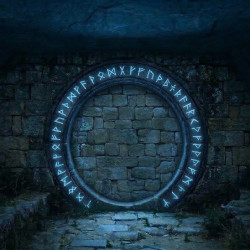
*The Exit Anchor* sits in a wall of the dedicated Anchor chamber, always wall-mounted at standing height, always behind a portcullis or heavy doorway that separates it from the main commercial space. It allows extraction to the surface following the standard rules: one-minute window, five-person cap, fifteen-minute cooldown, mana stone cost scaling with depth. This Anchor is the reason the entire commercial infrastructure of a Rest Area exists. Where extraction is possible, commerce follows.
*Ten Rest Anchors* are distributed across the Rest Area's walls, each one a smaller runic circle marked with a directional glyph that distinguishes it from the Exit Anchor. Rest Anchors are the downward transit system — the only reliable way to move from one floor band to the next without fighting a Warden. Activating a Rest Anchor requires no mana stone cost. The first person to step through opens a one-minute window during which up to four additional people may follow. The moment a fifth person passes through the portal closes immediately. If the minute expires with fewer than five people having entered the portal closes and the Rest Anchor enters a five-minute cooldown before it can be activated again. With ten Rest Anchors available simultaneously, congestion is rarely a practical problem.
The Anchor connects to a *random arrival point among the one hundred starting locations on the next floor band's first floor* — Floor 6 from Floor 5, Floor 16 from Floor 15, and so on. The arrival point is never controlled, never predictable, and never the same twice.
This randomness is the Tower's most effective ambush prevention and its most effective ambush creator simultaneously. A guild cannot mass a hundred fighters at Floor 5 and funnel them cleanly into a single arrival point on Floor 6 to overwhelm the corridor. The Rest Anchors scatter them across one hundred possible locations, separating large groups and dropping parties into whatever the current instance has placed at each arrival point. At the same time, parties who have just used a Rest Anchor land somewhere on the next floor band without knowing what is waiting for them there. The stairs between floors are predictable and therefore controllable. The Rest Anchors are not.
Each Rest Anchor follows the same one-minute window and five-person cap as all other Anchors in the Tower. There is no cooldown between uses — ten anchors serve the floor simultaneously and the next floor band has one hundred arrival points to absorb traffic. Congestion is not a meaningful problem at any depth the current adventuring economy reaches.
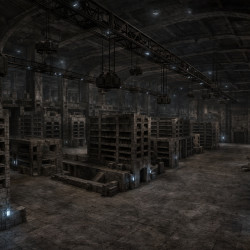
*Guild outposts and commercial stalls* develop around every Exit Anchor as a matter of economic inevitability. The deeper the Rest Area, the more specialised and expensive its offerings, and the more exclusive the guild presence. A Rest Area on Floor 005 serves hundreds of parties daily and resembles a crowded market. A Rest Area on Floor 025 serves a fraction of that number and resembles a fortified military supply depot with prices to match.
*Resting space* exists in some form at every Rest Area, ranging from the communal fire-lit chaos of Floor 005's common area to the small, expensive, and heavily guarded sleeping quarters that elite guilds maintain at deeper floors for their own parties exclusively.
What They Are Not
Rest Areas are not comfortable. They are not neutral ground in any political sense. The major guilds control the commercial infrastructure, the Guardians control the Exit Anchor access, and independent adventurers navigate both with whatever leverage their rank and reputation provide.
They are also not permanent safety in any absolute sense. The monster absorption field protects against creatures. It does not protect against other adventurers, guild enforcers, loan sharks, or the various human dangers that concentrate wherever desperate people and significant money occupy the same space.
A Rest Area is a mechanical fact of the Tower's construction. What people have built inside that fact is something considerably more complicated."
Connected records