Threat dossier · Tower Entities
Barricade Rat
Floor Range: 001–004 highest density on Floors 001 and 002 Physical Description The Barricade Rat is roughly the size of a large dog, though the comparison undersells how unsettling it is to encounter one in a narrow corridor for the first time. The body is compact and heavily built through the chest and...
Overview
Floor Range: 001–004 (highest density on Floors 001 and 002)
Physical Description
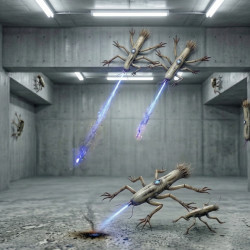
The Barricade Rat is roughly the size of a large dog, though the comparison undersells how unsettling it is to encounter one in a narrow corridor for the first time. The body is compact and heavily built through the chest and forequarters, with a long scarred tail that drags behind it and serves as a balance mechanism during rapid directional changes. The fur is coarse and patchy, darkened from what might once have been grey toward the kind of deep, stained charcoal that comes from years of living in stone passages. The eyes are small and set widely apart, catching ambient mana light in a way that produces a faint reflective gleam in darkness. The jaw is the most immediately threatening feature — wide, heavily muscled, capable of generating bite pressure that tears through uncured leather and comparable materials without significant resistance.
Healthy specimens carry a rough mana stone embedded in the chest cavity. The stone is low-rank, typically yielding modest returns on sale, but multiple stones from a successful pack encounter add up meaningfully for parties operating on tight margins.
Behaviour
Alone, a Barricade Rat is manageable for any prepared party. It is not clever in any tactical sense. It will charge an identified threat directly, bite, and attempt to tear rather than applying any strategy to the engagement. Its threat assessment is rudimentary — it identifies what is nearest and moves toward it. This predictability is exploitable.
The problem is that Barricade Rats are rarely alone.
They roam in packs of three to eight on the lower floors, and pack behaviour transforms their threat profile entirely. The pack does not coordinate in any conscious sense — there is no apparent leader, no signal system, no deliberate flanking. What exists instead is an emergent pattern: one rat's attack draws the defender's attention, the rest come from other angles before the defender can reset. This is not strategy. It is instinct optimised by generations of dungeon existence, and it works.
Pack ambushes from side passages are the most common cause of Barricade Rat fatalities. The rats have a strong instinct for concealment in recesses and behind rubble before committing to attack. A party moving through a corridor at reasonable pace will often pass a concealed rat without triggering it. The trigger is typically the rearmost party member passing the rat's position — the rat attacks the trailing person first, and the rest of the pack engages before the front of the party can reverse.
Parties with an experienced Rogue or any member with developed Hazard Sense rarely fall to this ambush pattern because the signs of concealed rats are readable: disturbed dust in approach corridors, the specific quality of silence that follows the absence of ordinary ambient sound, faint scratching from within wall recesses. These signs are not subtle to trained perception. They are entirely invisible to a new adventurer who does not know to look.
Threat Assessment
Alone: Low. A single Barricade Rat is fast and will commit fully to a charge, but its approach is direct and its attack pattern is simple. Stagger it with an impact, maintain reach advantage, and the encounter resolves without complication. The danger is exclusively from a bite that lands on exposed skin — the teeth carry an opportunistic contamination risk that should be treated at the next Rest Area rather than ignored.
Pack of three to five: Moderate. The pack pattern emerges. Parties without a clear frontline holder will find their formation disrupted by multiple attack vectors arriving simultaneously. The key error is overcommitting to one rat while others close. Control the number of simultaneous contacts.
Pack of six or more: High for unprepared parties. The rate of simultaneous contacts exceeds what most two-person frontlines can manage cleanly. A Vanguard with Shield Control and a Rogue capable of gap support handles this engagement well. A party without either tends to spend the encounter reacting rather than deciding.
Economic Notes
Barricade Rat hides are worth extracting if the party has a member with basic harvesting capability. The hide is durable and has legitimate craft uses at the Merchant Guild's affiliated workshops. The mana stone is the primary yield. Extract both or neither — partial harvesting is rarely worth the time investment for the return.
Connected records