Living folio · System
5. Equipment Proficiency System
What This System Measures The Equipment Proficiency System exists to separate three different things that are often incorrectly treated as one: whether a character can use an item at all how competent they are with that family of equipment in general what specialized things they can do with it through...
Overview
What This System Measures
The Equipment Proficiency System exists to separate three different things that are often incorrectly treated as one:
- whether a character can use an item at all
- how competent they are with that family of equipment in general
- what specialized things they can do with it through trained skills
These are not the same thing.
A character may:
- know how to use a spear without being highly proficient with spears
- be broadly proficient with bows without having advanced Hunter bow skills
- have strong shield proficiency without possessing every Vanguard shield technique
- know how to handle a field alchemy kit without being an Alchemist
This system prevents weapon and tool use from becoming confused with class identity.
The Three Layers
Equipment competency is measured in three layers:
- Basic Familiarity
- Equipment Family Proficiency
- Specialized Skill
All three may matter at once.
- Basic Familiarity
What it is
Basic familiarity measures whether a character can handle an item at the most practical level.
It answers:
- can they hold it correctly
- can they use it without obvious incompetence
- can they perform ordinary operation
- do they understand the most basic handling logic
This is not a true skill rank.
It is a baseline handling state.
Familiarity States
Suggested familiarity states are:
Unfamiliar
Familiar
Usable
Practiced
Meaning of each state
Unfamiliar
The character does not meaningfully know how to use the item correctly.
They may:
- misuse it
- waste effort
- operate it dangerously
- fail at basic handling under pressure
Familiar
The character understands what the item is and how it is normally used, but cannot yet rely on that knowledge under real stress.
They may:
- imitate basic use
- recognize ordinary operation
- still perform poorly in live conditions
Usable
The character can perform ordinary basic use without obvious failure.
They may:
- load it
- carry it
- swing it
- brace it
- fire it
- maintain simple operation
but they are not yet notably good with it.
Practiced
The character is comfortable with normal operation and can use the item reliably in realistic field conditions.
This is still not specialist mastery.
It means the item is a real part of their usable toolkit.
- Equipment Family Proficiency
What it is
Equipment family proficiency measures broad competence with a family of weapons or tools.
It answers:
- how good are they with this category overall
- how efficiently can they use it
- how stable are they under pressure
- how much of the family’s ordinary potential can they access
This is the main RPG-style measurement of general weapon or tool skill.
Common equipment families
Examples include:
- swords
- spears
- bows
- crossbows
- daggers
- shields
- hammers
- axes
- utility tools
- alchemical kits
- holy grimoires
- field repair kits
- ritual marking tools
- focus staves
- rods
These families should stay broad enough to matter, but not so broad that they lose meaning.
Proficiency rank ladder
Equipment family proficiency uses the normal rank ladder:
D
C
B
A
S
What the ranks mean
Rank D
The character is trained and dependable with the family.
They understand:
- standard use
- ordinary handling
- baseline practical application
Rank C
The character is clearly capable and efficient.
They show:
- better stability
- better timing
- fewer wasted movements
- stronger reliability under pressure
Rank B
The character is highly proficient.
They demonstrate:
- strong control
- good endurance economy
- consistent performance in serious situations
- broad functional command of the family
Rank A
The character is exceptional.
They use the family with:
- elite efficiency
- refined control
- high-pressure reliability
- expert practical authority
Rank S
The character is extraordinary and rare.
This rank should be used sparingly and only where truly setting-appropriate.
- Specialized Skill
What it is
Specialized skill measures named competencies that go beyond general proficiency.
It answers:
- what trained applications the character can perform
- what technical, tactical, or class-linked methods they know
- what specific advanced functions they can execute
This is where class identity usually lives.
Examples
Examples include:
Steady Aim
Weak Point Placement
Shield Control
Tool Weaponization
Volatile Throw
Channel
Circuit Activation
These are not replacements for proficiency.
They sit on top of it.
A character may have:
- bow proficiency
but not
- advanced bow-related Hunter skills
A character may have:
- shield proficiency
but not
- Vanguard-level shield techniques
A character may have:
- alchemical kit proficiency
but not
- Alchemist class skills
How The Three Layers Work Together
A complete equipment reading looks like this:
- familiarity tells whether the character can use it at all
- proficiency tells how good they are with the family overall
- specialized skills tell what advanced things they can do with it
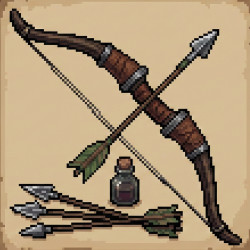
Example: Hunter with a bow
- Familiarity:
Practiced
- Bow Proficiency:
B
- Skills:
Steady Aim B
Range Management B
Weak Point Placement C
This means:
- the bow is fully usable to them
- they are broadly strong with bows
- they also possess specific trained Hunter techniques
Example: Vanguard with shield and sword
- Familiarity:
Practiced
- Shield Proficiency:
B
- Sword Proficiency:
C
- Skills:
Shield Control B
Hold the Line C
Threat Lock C
This means:
- they are broadly good with shields
- solid with swords
- and have class skills that make that equipment matter tactically
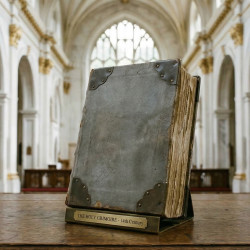
Example: Priest with Holy Grimoire
- Familiarity:
PracticedorBound
- Holy Grimoire Proficiency:
B
- Skills:
Channel B
Grimoire Attunement C
This means:
- they can use the grimoire properly
- they are broadly competent with its holy use framework
- and possess Priest-specific sacred applications
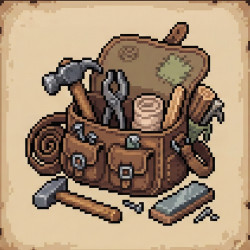
Example: Craftsman with utility hammer
- Familiarity:
Practiced
- Hammer or Utility Tool Proficiency:
C
- Skills:
Tool Weaponization B
Field Modification C
This means:
- they know how to use the tool family well
- and can apply specialized skills through it
Important Distinctions
Familiarity is not proficiency
A character may be Usable with a spear and still have no meaningful spear proficiency rank.
Proficiency is not a class skill
A character may have Bow Proficiency C without being a Hunter.
A class skill is not the same as weapon mastery
A Hunter skill like Weak Point Placement does not automatically mean the user has top-tier bow proficiency.
It means they possess that specialized competency.
Tools follow the same rule as weapons
This system applies to:
- weapons
- shields
- holy implements
- alchemical kits
- repair kits
- ritual tools
- casting focuses
- other meaningful equipment families
Bound Implements and Special Cases
Some equipment may justify a special familiarity state beyond the normal four.
Bound
Bound may be used for items that require formal linkage, sanctioned ownership, or recognized personal integration.
Examples may include:
- Holy Grimoires
- certain ritual tools
- personal magical focuses if your setting supports that
Bound does not replace proficiency or skill.
It only describes the special relationship between character and item.
A character may be:
- Bound to a Holy Grimoire
- have Holy Grimoire Proficiency
C
- and possess
Channel B
All three describe different things.
How To Use This In RPG Terms
When building a sheet, describe equipment with:
- Familiarity
- Family Proficiency
- Relevant Specialized Skills
Recommended sheet format
Simple format
Bow Familiarity: Practiced
Bow Proficiency: B
Skills: Steady Aim B, Range Management C
Compact format
Bow: Practiced / B / Steady Aim B, Weak Point Placement C
Tool example
Alchemical Kit: Practiced / C / Compound Preparation B, Stability Control C
Design Rule
Do not turn every weapon or tool use into a named skill.
If everything becomes a skill entry, the system becomes bloated and class boundaries get messy.
Use:
- familiarity for baseline handling
- proficiency for broad family competence
- skill ranks for specialized application
This keeps the system:
- cleaner
- more readable
- easier to balance
- easier to write in prose
- easier to convert into tabletop terms
What Belongs In Each Layer
Familiarity layer
Belongs here:
- basic handling
- loading
- carrying
- ordinary operation
- not embarrassing yourself immediately
Proficiency layer
Belongs here:
- broad competence with the family
- efficiency
- stability
- timing
- pressure reliability
- stamina economy
- handling quality
Skill layer
Belongs here:
- named techniques
- tactical applications
- class expressions
- advanced use cases
- specialist methods
Class Relationship
Classes influence equipment competency, but do not fully replace it.
A class may:
- make certain families common
- make training easier
- give access to class-linked specialized skills
- strongly encourage certain proficiencies
But class identity still remains separate from equipment family proficiency.
Example:
- most Hunters will favor bows
- most Vanguards will favor shields and frontline weapons
- most Priests will favor Holy Grimoires
- most Alchemists will favor alchemical kits
That does not mean the family proficiency itself is a class skill.
Summary
Equipment competency is measured in three layers:
Basic Familiarity
Equipment Family Proficiency
Specialized Skill
This system exists so the setting can distinguish between:
- being able to use something
- being broadly good with it
- being specially trained in what can be done through it
That distinction keeps equipment logic clear, class identity intact, and character sheets readable.
Connected records