Living folio · Race
Humans
Humans Overview Humans are the most common sight in Versa and across the known world, and that familiarity is precisely what makes them difficult to define. They are not the strongest race, nor the fastest, nor the most attuned to mana. They carry no inherited gifts that set them apart in any single...
Overview
Humans
Overview
Humans are the most common sight in Versa and across the known world, and that familiarity is precisely what makes them difficult to define. They are not the strongest race, nor the fastest, nor the most attuned to mana. They carry no inherited gifts that set them apart in any single discipline. What they have instead is something harder to quantify: the capacity to become almost anything, and the cultural drive to compensate for everything they lack.
Among scholars and guild taxonomists, humans are often used as the baseline against which other races are measured. When someone wants to describe how strong a dwarf is, they compare it to a human. When someone wants to explain how sensitive an elf's mana perception is, the human serves as the reference point. This has given humans a complicated relationship with their own identity. They are the standard, the average, the middle ground, and some find dignity in that while others spend their entire lives trying to escape it.
Physical Appearance
Humans present the widest range of physical variation among all the known races, which is itself one of their defining characteristics. Height, build, colouring, and facial structure shift dramatically across regions and bloodlines, making it nearly impossible to define a single human silhouette. A human from the coastal wards of Versa may look entirely unlike one from the inland farming settlements, and both may differ completely from a human born in the northern trade cities.
What remains consistent is the overall architecture of the form.
Humans stand at a medium height relative to other races, taller than dwarves, shorter than the tallest elves, and generally within a range that places them neither at an advantage nor a disadvantage in terms of physical presence. Their builds follow the same principle: neither unusually dense nor unusually lean as a baseline, with musculature that reflects their history of labour, training, or lack thereof rather than any racial inheritance.
Their faces are balanced and proportionate without the elongated refinement of elven features or the compact density of dwarven ones. Human faces read as immediate and expressive, built for visible emotion. Their eyes, noses, mouths, and jawlines carry a directness that other races sometimes find disarming, particularly those whose own expressions are subtler or more restrained. Humans show what they feel, often before they intend to.
Skin tones run across a full spectrum. Hair textures and colours vary just as broadly. Eye colour tends toward earth tones, blues, and greens, with more unusual shades appearing occasionally but carrying no particular significance in the way they might for other races.
Because humans have no fixed racial physical profile, they are also the race most likely to be underestimated or overlooked in a crowd. They do not arrive carrying visual signals of power or otherness. They look, as many adventurers from other races have noted with varying degrees of dismissiveness, entirely ordinary. Which means they are also the race most likely to surprise you.
Mana Relationship
Humans fall at the centre of the mana sensitivity spectrum. They can perceive mana in the way a person can feel warmth from a fire: they know it is there, they can orient toward it, and with training they can learn to work with it in limited ways. But they do not feel it instinctively the way some other races do, and they do not carry within their bodies any inherited framework for shaping or conducting it.
The critical absence in the human racial profile is the Mana Weaver passive, a baseline skill present in several other races that allows them to perceive mana flow as something close to a second sense and begin shaping it with relative naturalness. Humans must construct this understanding from scratch, through study, repetition, and significant investment of time. A human who achieves genuine mana competence has earned it through sustained effort, not inheritance.
This does not make human mages impossible. Plenty exist and some are extraordinary. But the road to competence is longer and the early stages are considerably harder, which means most humans, when faced with the practical question of how to incorporate mana into their work, arrive at the same answer their culture has refined over generations: let the stone do the work.
Enchanted Items and the Practical Tradition
The defining cultural response to their mana limitations is what historians call the Practical Tradition, though most humans who follow it would never name it anything at all. It is simply the way things are done.
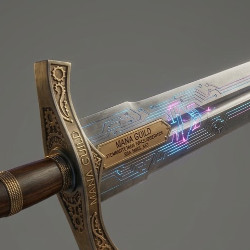
Rather than investing years in developing personal mana manipulation, humans have historically turned to enchanted items, tools and weapons and gear that carry mana effects already bound into them, requiring the user only to supply the right stone, activate the item in the correct way, and trust the craft. A human warrior who cannot cast a single spell can still carry a blade whose edge holds a sharpening enchantment, wear bracers that distribute impact force, or use a lantern that produces stable mana light without any personal output required.
This has shaped human industry in profound ways. Humans are disproportionately represented in enchantment workshops, stonework refineries, appraisal houses, and the commercial trades that move enchanted tools from makers to users. They did not invent the enchanted item, but they perfected its mass application and built entire economies around reliable access to it.
In the Tower specifically, this translates into a human adventuring style that is notably gear-dependent compared to some other races. A well-equipped human party can cover for almost any magical gap through the right loadout of enchanted equipment. The weakness is obvious: break the gear, run out of stones, or lose your pack in a bad fight, and a human party loses a significant portion of its edge immediately. Other races carry their advantages in their bodies. Humans carry theirs in their equipment.
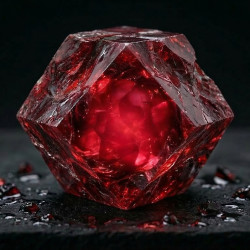
The cultural result is that humans tend to be meticulous about their gear, deeply invested in the economy that produces and maintains it, and considerably more interested in mana stones as a resource than some other races, not because they can use the raw mana personally, but because the stones power everything that compensates for what they cannot do themselves.
Cultural Tendencies
Humans in Versa and the wider world are broadly characterised by adaptability and ambition, though those qualities express themselves very differently depending on where a human was raised and what they have had to survive.
They are, as a rule, the most class-flexible of all races. Where some races find their inherited traits pushing them naturally toward specific roles, humans can take up almost any class with a roughly equal baseline. No direction is dramatically easier or harder for them because of their race alone, which means their choices are governed more by circumstance, culture, and personal drive than by biological predisposition. They end up everywhere. As warriors, rogues, scholars, merchants, healers, and occasionally mages, they fill whatever gaps the world requires and adapt their approach based on what works.
This flexibility has produced a culture that is, by necessity, highly collaborative and trade-oriented. Humans cannot out-perceive elves, out-endure dwarves, or out-sense mana like some of the more specialised races. They compensate through institutions: guilds, contracts, professional associations, markets, and the infrastructure of mutual dependency. The largest trading networks in the known world are predominantly human enterprises. The most common contracts in Tower guild law are written in human commercial tradition. The enchanted item trade, which touches every race and every profession, runs largely on human-built supply chains.
Within Versa, humans are the plurality of the population and hold a corresponding plurality in every layer of its society. They are not dominant in the way a single powerful race might dominate a territory. They are simply everywhere, filling every role, occupying every tier, and holding together the commercial and social fabric of the city through sheer weight of numbers, institutional knowledge, and the practical tradition of making whatever tools are needed to do what needs doing.
Summary Traits
Maximum Height - 200 cm
Physical Strength - Average
Average Agility - Average
Average Skin Toughness - Average
Mana Sensitivity - Average
Class Flexibility - Banned (Hunter | Rogue)
<u>Racial Advantages</u> - Strength - Durability - Craft intelligence - Explosive close range
<u>Racial Disadvantages</u> - Low speed - Limited stealth capability - Reduced reach
Humans are not the race of power. They are the race of presence. They are everywhere, they endure, and they build the systems that let everyone else function. In a world shaped by the Tower, that turns out to be enough.
Connected records