Living folio · Skills
Craftsman — Class Skill List
Class Identity Craftsman is the class of the practical field maker: the adventurer trained to understand materials, modify tools and weapons for immediate need, build usable solutions under pressure, and turn dangerous spaces into workable ones. In dungeon terms, Craftsman exists because a party does not...
Overview
Class Identity
Craftsman is the class of the practical field-maker: the adventurer trained to understand materials, modify tools and weapons for immediate need, build usable solutions under pressure, and turn dangerous spaces into workable ones.
In dungeon terms, Craftsman exists because a party does not survive on killing power alone. It survives because: - gear does not fail at the wrong moment - damaged tools remain usable - bad positions become defensible - missing equipment becomes improviseable - wounded bodies can be stabilized - the environment starts working for the party instead of against it
Craftsman is not just a maintenance role. It is the class of the person who keeps an expedition operational when material reality starts collapsing.
Party Role
A Craftsman usually fills these roles: - equipment specialist - field modifier - structural improviser - practical combat-support engineer - non-magical stabilization support - environment shaper
A good Craftsman helps the party by: - modifying gear to suit current threats - repairing and reinforcing critical equipment - using tools and practical weapons to defend themselves in close danger - deploying physical support pieces during combat - improving defensive positions, recovery spaces, and expedition safety - solving “we do not have the right thing” problems with material logic
Distinct Identity
Craftsman is not Alchemist. - Alchemist fights and supports through compounds, reagents, reactions, and volatile substances - Craftsman fights and supports through tools, reinforced gear, deployables, structural logic, and material adaptation
Craftsman is not Vanguard. - Vanguard survives pressure by enduring and controlling the front directly - Craftsman survives pressure by making the ground, gear, and local setup more favorable
Craftsman is not Priest. - Priest restores through holy mana - Craftsman stabilizes and enables recovery through physical intervention
Mechanical Identity
Craftsman skills should emphasize: - material assessment - field repair - weapon and armor modification - practical combat use of tools and workmanlike weapons - deployable physical support during combat - environmental preparation and adaptation - improvisation from local materials - non-magical stabilization - expedition load and infrastructure logic - long-term survivability across repeated descents
Craftsman should not own: - true alchemical synthesis - advanced chemical combat identity - direct mana shaping - direct magical healing - stealth infiltration identity - pure frontline tanking - specialist martial mastery equal to Vanguard, Rogue, or Hunter
Equipment Relationship
Natural weapon families
- hammers - mallets - hatchets - chisels and heavy utility knives - short practical blades - reinforced tools - compact workmanlike axes - pole tools or hooked labor implements if the setting supports them
Natural support equipment
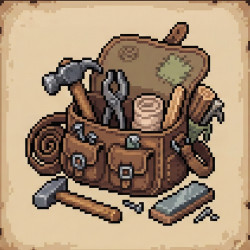
- repair kit - shaping tools - fastening tools - reinforcement tools - wedges, clamps, braces, pitons - hauling and carrying gear - rope and anchor systems - compact deployable support pieces - splinting and stabilization tools - camp and heat-control tools - salvage and dismantling gear
Not core Craftsman equipment
Craftsman should not naturally own mastery over: - full alchemical kits - ritual tools - grimoires - specialist mana-circuit craft as a primary combat identity - deep ranged weapon systems - stealth-first gear - elegant dueling weapons as a class norm
Skill List
Combat
- Combat Fit - Tool Weaponization - Reinforced Edge
Control / Environment
- Quick Emplacement - Defensive Setup - Hazard Shaping
Craft
- Material Read - Field Repair - Field Modification - Improvised Construction - Utility Fabrication
Recovery
- Field Stabilization - Recovery Setup
Fieldcraft / Logistics
- Load Discipline
Skill Entries
Material Read
Category: Craft
Class access: Craftsman
Short identity line: Know what a thing is about to do before it does it.
What competency this skill represents:
The rapid and reliable reading of material condition through wear, tension, warping, grain, fracture pattern, looseness, heat stress, and structural fatigue.
Why this belongs to this class in the lore:
This is the class foundation. Craftsman cannot modify, reinforce, build, or stabilize anything without first reading material truth correctly.
Typical prerequisites: - none
Compatible weapon / tool / item families if relevant: - repair kits - shaping tools - weapons - armor - structural materials - rope, braces, and camp gear
What Rank D means:
Can identify obvious flaws, damage, and unsafe conditions.
What Rank C means:
Can detect developing failure before it becomes obvious to others.
What Rank B means:
Reads stress and usable potential well enough to guide rapid intervention under pressure.
What Rank A means:
Can assess unfamiliar materials and damaged systems with exceptional reliability in field conditions.
Narrative use:
Lets the Craftsman see weakness, strain, and practical opportunity in everything around them.
Tabletop use:
Supports gear assessment, structural assessment, identifying usable salvage, and predicting failure points.
Limits and anti-abuse notes:
Not magical detection and not alchemical chemistry.
Overlap check with other classes:
Alchemist reads reactive value. Craftsman reads physical state and structural use.
Field Repair
Category: Craft
Class access: Craftsman
Short identity line: Keep the broken thing useful.
What competency this skill represents:
The restoration of damaged weapons, armor, tools, and expedition gear to workable field condition with limited time and imperfect equipment.
Why this belongs to this class in the lore:
One of the core reasons the class exists.
Typical prerequisites: - Material Read Rank D
Compatible weapon / tool / item families if relevant: - repair kit - weapons - armor - straps, fittings, harnesses - climbing gear - support structures
What Rank D means:
Can perform functional field repairs that hold long enough to matter.
What Rank C means:
Repairs faster and with better priority judgment.
What Rank B means:
Keeps critical equipment operational through repeated stress in conditions where others would abandon it.
What Rank A means:
Produces field repairs with reliability far beyond what conditions should allow.
Narrative use:
Lets the expedition keep going after the first layer of failure.
Tabletop use:
Supports emergency repair, restoring damaged gear, prolonging equipment usefulness, and reducing forced attrition.
Limits and anti-abuse notes:
Not workshop perfection and not total restoration of all damage.
Overlap check with other classes:
This remains a core class lane.
Field Modification
Category: Craft
Class access: Craftsman
Short identity line: Change the gear to match the problem.
What competency this skill represents:
The practical alteration of weapons, armor, tools, and expedition gear to improve present usefulness: refit, rebalance, reinforce, shorten, brace, grip-shift, carry-shift, or repurpose.
Why this belongs to this class in the lore:
This is one of the explicit pillars of the class.
Typical prerequisites: - Material Read Rank C - Field Repair Rank D
Compatible weapon / tool / item families if relevant: - weapons - shields - armor - support tools - hauling gear - climbing gear - camp infrastructure
What Rank D means:
Can make basic practical changes that improve immediate usability.
What Rank C means:
Adapts equipment toward specific threats, terrain, or role needs with reliable effect.
What Rank B means:
Repeatedly makes smart situation-driven changes that materially improve party function.
What Rank A means:
Can reshape equipment behavior with exceptional judgment under field conditions.
Narrative use:
Makes Craftsman feel active and inventive.
Tabletop use:
Supports temporary role-tuning, gear adaptation, encounter-specific preparation, and practical upgrades.
Limits and anti-abuse notes:
Not enchantment, not alchemy, and not free permanent power creep.
Overlap check with other classes:
Craftsman changes physical function; Alchemist changes reactive effect.
Combat Fit
Category: Combat
Class access: Craftsman
Short identity line: Fight effectively with practical tools and durable workmanlike weapons.
What competency this skill represents:
The disciplined use of practical melee implements in close danger: work hammers, hatchets, reinforced chisels, short utility blades, hooked tools, and other compact tools that can serve both labor and combat.
Why this belongs to this class in the lore:
Craftsman must be able to defend itself in the dungeon.
Typical prerequisites: - proficiency in one practical melee family - Material Read Rank D
Compatible weapon / tool / item families if relevant: - hammers - mallets - hatchets - chisels - short utility blades - reinforced tools
What Rank D means:
Can defend themselves competently with tools and practical weapons when danger closes.
What Rank C means:
Uses leverage, grip, balance, and material understanding to fight more efficiently than an ordinary worker would.
What Rank B means:
Can hold their own in practical close combat better than most support classes.
What Rank A means:
Exceptional for a non-specialist combat class, though still beneath dedicated frontliners and skirmish specialists.
Narrative use:
Lets the Craftsman survive because they know how to put a hammer through something if needed.
Tabletop use:
Supports competent self-defense, practical melee fighting, use of improvised or tool-based weapons, and surviving close pressure long enough to do class work.
Limits and anti-abuse notes:
Not a duelist skill and not a frontline-hold skill.
Overlap check with other classes:
Vanguard masters direct combat pressure. Craftsman fights as a hardened practical survivor.
Tool Weaponization
Category: Combat
Class access: Craftsman
Short identity line: Turn work tools into reliable instruments of harm.
What competency this skill represents:
The adaptation and use of work tools, reinforced implements, and modified labor gear as deliberate combat instruments rather than mere improvised desperation weapons.
Why this belongs to this class in the lore:
This gives Craftsman a clearer artificer-like combat identity.
Typical prerequisites: - Combat Fit Rank C - Field Modification Rank D
Compatible weapon / tool / item families if relevant: - hammers - chisels - hatchets - hooked tools - reinforced utility implements - modified work gear
What Rank D means:
Can make practical tool-use in combat more reliable and less awkward.
What Rank C means:
Uses modified tools in ways that produce real tactical value, not just emergency self-defense.
What Rank B means:
Can fight with engineered tool-weapons as a recognizable combat style.
What Rank A means:
Turns modified practical gear into dangerous and highly efficient combat-support instruments.
Narrative use:
Makes elite Craftsmen feel like dungeon artificers rather than camp laborers.
Tabletop use:
Supports combat use of tools, modified weapon-tool hybrids, practical control or strike options, and strong class-themed self-defense.
Limits and anti-abuse notes:
Not a replacement for true weapon specialization across all martial families.
Overlap check with other classes:
Craftsman weaponizes tools. Other combat classes weaponize purpose-built arms more deeply.
Reinforced Edge
Category: Combat / Equipment
Class access: Craftsman
Short identity line: Make the tool or weapon hold under punishment.
What competency this skill represents:
The preparation and reinforcement of striking implements so they maintain function, reliability, and structural integrity under repeated practical use.
Why this belongs to this class in the lore:
Supports both party weapon support and the Craftsman’s own practical combat style.
Typical prerequisites: - Field Modification Rank C - Combat Fit Rank D
Compatible weapon / tool / item families if relevant: - blades - hammers - axes - reinforced tools - shield edges and braces in limited contexts
What Rank D means:
Can improve the resilience or immediate dependability of a striking tool or weapon.
What Rank C means:
Can adapt reinforcement to likely stress pattern and usage.
What Rank B means:
Meaningfully improves how hard familiar gear can be driven before failing.
What Rank A means:
Produces weapon and tool reinforcement with exceptional field value.
Narrative use:
Shows why party weapons keep working when they should be degrading.
Tabletop use:
Supports reinforcement, improved reliability, reduced degradation, and pre-combat gear preparation.
Limits and anti-abuse notes:
Not magical enhancement and not flat damage inflation.
Overlap check with other classes:
Craftsman improves the gear; combat specialists extract the deepest performance from it.
Quick Emplacement
Category: Control / Environment
Class access: Craftsman
Short identity line: Put useful structure into place fast enough to matter in a fight.
What competency this skill represents:
The rapid deployment of practical physical supports during active danger: braces, compact barriers, anchor points, support frames, hooked lines, cover pieces, and other quick-use engineered aids.
Why this belongs to this class in the lore:
This gives elite Craftsmen visible active combat presence.
Typical prerequisites: - Improvised Construction Rank D - Combat Fit Rank D
Compatible weapon / tool / item families if relevant: - braces - wedges - rope systems - compact deployables - folding supports - anchor tools
What Rank D means:
Can place simple useful support pieces quickly under manageable pressure.
What Rank C means:
Deploys physical aids fast enough to affect active combat decisions.
What Rank B means:
Can repeatedly change local fight conditions with compact engineered support.
What Rank A means:
Deploys physical battlefield support with remarkable speed and judgment.
Narrative use:
Makes Craftsman feel active during combat rather than only before or after it.
Tabletop use:
Supports quick cover, anchor placement, brace deployment, and local obstacle or support creation mid-fight.
Limits and anti-abuse notes:
Requires carried materials, tools, or prepared pieces.
Overlap check with other classes:
Craftsman brings structure into the fight; Vanguard brings body-presence into the fight.
Improvised Construction
Category: Craft
Class access: Craftsman
Short identity line: Build what is needed from what exists.
What competency this skill represents:
The creation of practical structures and systems from available materials: braces, crossings, supports, barriers, anchors, wedges, and salvaged functional constructs.
Why this belongs to this class in the lore:
A defining class competency.
Typical prerequisites: - Material Read Rank C - Field Repair Rank C
Compatible weapon / tool / item families if relevant: - construction tools - salvage materials - rope, braces, wedges, pitons - broken gear repurposing - camp materials
What Rank D means:
Can build simple field-useful structures that work long enough to matter.
What Rank C means:
Builds with better judgment, better stability, and better adaptation to site conditions.
What Rank B means:
Can solve major practical problems with limited material in ways others would not see.
What Rank A means:
Produces robust, highly useful field constructions under severe constraints.
Narrative use:
Makes the environment materially interactive.
Tabletop use:
Supports emergency structures, crossings, bracing, barriers, and practical systems from salvage.
Limits and anti-abuse notes:
Not instant fortress-making.
Overlap check with other classes:
This remains uniquely Craftsman.
Utility Fabrication
Category: Craft
Class access: Craftsman
Short identity line: Make the small useful thing before its absence gets someone hurt.
What competency this skill represents:
The creation of practical expedition-use items: wedges, splints, pegs, braces, patch pieces, carrying fixtures, cook supports, hooks, and other small but critical support components.
Why this belongs to this class in the lore:
Covers the constant low-scale production that makes expeditions work.
Typical prerequisites: - Material Read Rank D - shaping tool familiarity
Compatible weapon / tool / item families if relevant: - shaping tools - maintenance kit - salvage materials - camp tools - carrying tools
What Rank D means:
Can produce basic useful expedition items from carried or found materials.
What Rank C means:
Produces the right item faster and with less waste.
What Rank B means:
Keeps a party supplied with practical supports that materially improve efficiency.
What Rank A means:
Makes missing utility a problem far less often than it should be.
Narrative use:
Keeps Craftsman relevant even outside dramatic scenes.
Tabletop use:
Supports support-item creation, replacing missing pieces, expedition preparedness, and practical problem-solving.
Limits and anti-abuse notes:
Not workshop mass-crafting.
Overlap check with other classes:
A quiet but strong class identity skill.
Defensive Setup
Category: Control / Environment
Class access: Craftsman
Short identity line: Prepare the space to keep the party alive.
What competency this skill represents:
The arrangement of barriers, braces, footing correction, choke aids, warning placements, and practical defensive geometry in a position the party must hold or rest in.
Why this belongs to this class in the lore:
Craftsman should make survivable space physically, not magically.
Typical prerequisites: - Improvised Construction Rank D - Material Read Rank C
Compatible weapon / tool / item families if relevant: - braces - wedges - rope - pitons - camp materials - salvage structure pieces
What Rank D means:
Can make a space more defensible in obvious practical ways.
What Rank C means:
Understands how setup affects line safety, enemy approach, and recovery security.
What Rank B means:
Can turn poor positions into workable defensive positions with strong practical value.
What Rank A means:
Produces defensive setups worth far more than the time and materials should buy.
Narrative use:
Excellent for holdout and expedition scenes.
Tabletop use:
Supports hold-point preparation, camp defense, extraction-point setup, and local environmental advantage.
Limits and anti-abuse notes:
Not magical warding and not trapmaster excess.
Overlap check with other classes:
Vanguard holds the line; Craftsman helps define what line can be held.
Hazard Shaping
Category: Control / Environment
Class access: Craftsman
Short identity line: Make the space work against them.
What competency this skill represents:
The physical alteration of immediate surroundings to hinder hostile movement, complicate enemy use of terrain, and improve party use of the same space.
Why this belongs to this class in the lore:
This is one of the best expressions of environment modification as a class pillar.
Typical prerequisites: - Defensive Setup Rank C - Quick Emplacement Rank D
Compatible weapon / tool / item families if relevant: - wedges - braces - rope - salvage - anchors - terrain-use tools
What Rank D means:
Can make simple practical changes that inconvenience enemies and help allies.
What Rank C means:
Shapes terrain deliberately around expected hostile movement.
What Rank B means:
Creates meaningful environmental advantage with limited time and material.
What Rank A means:
Consistently turns neutral or hostile terrain into favorable practical ground.
Narrative use:
Shows that the Craftsman is actively fighting the dungeon itself.
Tabletop use:
Supports obstacle creation, movement hindrance, terrain adaptation, and practical encounter control.
Limits and anti-abuse notes:
Not battlefield sorcery.
Overlap check with other classes:
Hunter exploits terrain; Craftsman alters terrain usability.
Field Stabilization
Category: Recovery
Class access: Craftsman
Short identity line: Keep the body usable until better treatment arrives.
What competency this skill represents:
The non-magical stabilization of wounds, breaks, bleeding, and bodily stress through support, compression, splinting, wrapping, and practical treatment judgment.
Why this belongs to this class in the lore:
Craftsman should support recovery through physical means.
Typical prerequisites: - Material Read Rank C - basic medical tool familiarity
Compatible weapon / tool / item families if relevant: - splints - wraps - braces - treatment kit - carrying supports
What Rank D means:
Can keep common injuries from worsening immediately.
What Rank C means:
Stabilizes wounded allies more cleanly and with better judgment.
What Rank B means:
Produces condition management good enough that specialists respect it.
What Rank A means:
Can preserve bodily function through severe physical injury at an exceptional non-magical level.
Narrative use:
Draws a clear line between stabilization and healing.
Tabletop use:
Supports wound stabilization, preventing deterioration, keeping allies transportable or survivable, and recovery support.
Limits and anti-abuse notes:
Does not replace Priest healing or Alchemist status treatment.
Overlap check with other classes:
Priest heals. Alchemist treats statuses. Craftsman physically preserves function.
Recovery Setup
Category: Recovery
Class access: Craftsman
Short identity line: Make downtime actually restore something.
What competency this skill represents:
The preparation of a rest environment that materially improves recovery: bedding, dryness, warmth, layout, hygiene, wound accommodation, cooking setup, and physical comfort that reduces ongoing degradation.
Why this belongs to this class in the lore:
This is how Craftsman turns time into survivability.
Typical prerequisites: - Field Stabilization Rank D - Defensive Setup Rank D
Compatible weapon / tool / item families if relevant: - camp gear - bedding - heat-control tools - cooking supports - sanitation tools
What Rank D means:
Can prepare a rest setup better than rough default camp conditions.
What Rank C means:
Understands the interaction between environment, injury, and meaningful recovery.
What Rank B means:
Can create rest conditions that substantially improve expedition endurance.
What Rank A means:
Turns harsh downtime into effective practical recovery beyond what the raw environment should permit.
Narrative use:
Makes long expeditions feel serious and physical.
Tabletop use:
Supports better rest, reduced attrition, stronger between-encounter recovery, and expedition sustainability.
Limits and anti-abuse notes:
Not magical restoration.
Overlap check with other classes:
Craftsman owns the physical recovery environment.
Load Discipline
Category: Fieldcraft / Logistics
Class access: Craftsman
Short identity line: Carry what matters in the way that keeps it usable.
What competency this skill represents:
The practical organization, protection, distribution, and rationing of carried gear and supplies across a party or expedition.
Why this belongs to this class in the lore:
A material-support class must own load logic in a meaningful way.
Typical prerequisites: - Material Read Rank D
Compatible weapon / tool / item families if relevant: - packs - harnesses - hauling tools - wraps - carrying gear - storage fixtures
What Rank D means:
Can pack and distribute gear competently enough to avoid obvious waste and failure.
What Rank C means:
Manages carried load in ways that improve access, endurance, and gear survival.
What Rank B means:
Keeps a party better supplied, faster to retrieve what matters, and less harmed by bad carry logic over time.
What Rank A means:
Turns expedition logistics into a meaningful practical advantage.
Narrative use:
Helps long expeditions feel materially real.
Tabletop use:
Supports carry management, access planning, protected supplies, and expedition efficiency.
Limits and anti-abuse notes:
Not infinite carry capacity and not inventory abstraction magic.
Overlap check with other classes:
One of the class’s strongest long-expedition identity lanes.
Redundancy Pass
Close but still distinct
Field Repair and Field Modification - Field Repair restores function - Field Modification changes function toward present need
Combat Fit and Tool Weaponization - Combat Fit is baseline practical self-defense - Tool Weaponization is a higher-level engineered combat style
Quick Emplacement and Defensive Setup - Quick Emplacement is fast in-combat deployment - Defensive Setup is broader prepared defensive shaping
Improvised Construction and Utility Fabrication - Improvised Construction covers larger structures and systems - Utility Fabrication covers smaller support items
Connected records