Threat dossier · Tower Entities
Key Holder
Physical Description The Key Holder is wrong in a way that takes a moment to identify. It is human in outline, but only in the most generous sense. The figure stands close to two meters in height when fully extended, though it is almost never seen that way. Its posture is permanently compromised — the spine...
Overview
Physical Description
The Key Holder is wrong in a way that takes a moment to identify.
It is human in outline, but only in the most generous sense. The figure stands close to two meters in height when fully extended, though it is almost never seen that way. Its posture is permanently compromised — the spine bent forward at an unnatural angle, shoulders collapsed inward, the entire upper body drawn down as though it is constantly trying to align itself with a keyhole just out of reach. It moves in a perpetual crouch, back curved and head lowered, giving the impression that it was reshaped around this posture rather than having adopted it.
Its movement is unnervingly quiet.
For a figure of its size, it produces almost no footfall. The sound is absorbed — by the body, by the environment, by the same mana saturation that has altered its structure. What little noise it makes comes from the faint, intermittent contact of metal: a soft, irregular whispering of keys shifting against one another. This subdued metallic sound often reaches an adventurer before the creature itself is consciously perceived.
It is clothed, if the term still applies.
The garments are the remnants of what the host wore at the time of transformation — now reduced to ragged, fused layers of cloth that cling unevenly to the body. Sections of fabric appear partially melted and re-hardened, bonded in places directly to the flesh beneath. Other portions hang loose in torn strips, stiffened and darkened, as though the material itself has undergone the same corruption as the body.
The flesh beneath is no longer structurally stable.
Large areas of the face and upper body appear molten — not liquid, but warped, as though once softened under extreme heat and then cooled in a collapsed, distorted form. The face retains its general human arrangement, but the geometry is wrong. Features sag or pull out of alignment. The mouth does not open cleanly. The nose is partially collapsed. The eyes remain, but sit within a surface that no longer behaves like a face should.
When the creature is injured, it bleeds.
The blood is thick and inconsistent — a mixture of blackened fluid and rust-colored particulate matter that separates as it moves. It does not flow cleanly. It stains like oxidized metal and dries into brittle residue rather than clotting in any natural way.
Its hands are elongated, fingers slightly too long, joints bending just beyond normal limits.
They are rarely empty.
The Keys
Every Key Holder carries keys in significant quantity — typically between thirty and over a hundred specimens.
No two collections are identical.
The keys vary in size, material, and design, but most share one characteristic: wear consistent with prolonged, obsessive use. Many have been scraped repeatedly against stone surfaces, their edges unevenly ground down and reshaped. The result is not precision sharpness, but a crude edge — sufficient to puncture skin and cause damage when driven with force.
The keys are typically around ten centimeters in length.
In close combat, the Key Holder uses them as improvised weapons, gripping them in clusters or individually and driving them forward in direct, forceful stabbing motions. There is no technique to this. Only repetition and intent.
The keys still produce sound, but less than expected.
They are often held close to the body, dampening their natural clatter. What remains is a low, layered metallic whisper — subtle, irregular, and difficult to locate precisely in enclosed spaces.
What They Are
The exact origin process is not publicly documented by any institution in Versa.
What is established is that Key Holders are not creatures that originated in the Tower’s generation systems.
They are people who entered the Tower and did not come back as people.
Prolonged mana saturation in the structural zones of Floors 003 and 004 — particularly in enclosed architectural sections where ambient mana accumulates — produces a corruption process in individuals whose Resonance cannot resist it. The process is gradual. It is irreversible once visible. It does not fully erase behavior.
The result is a figure that still navigates, still interacts with doors, still responds to the presence of others — but without any coherent purpose that can be externally understood.
The keys remain the most disturbing element.
Whether they are retained from before transformation or collected afterward is unknown.
They are always present.
They are always used.
Behaviour
The Key Holder’s fundamental drive is doors.
It moves through the corridor systems in patterns shaped entirely by the presence of closed structures.
Open door: it passes through.
Closed door: it stops.
The key-testing process is methodical and unhurried. Each key is tried in sequence. There is no observable memory of failure — keys are sometimes retried before the collection is exhausted. A large key set can result in extended interaction times far beyond simple expectation.
When the collection fails, behaviour changes.
The creature enters a frenzy state.
This is not immediate chaos. It is escalation.
The patience disappears. The Key Holder begins applying direct physical force to the door — sustained, rhythmic impacts using its full body weight and strength. The sound carries through corridors: heavy strikes, irregular breathing, and the shifting metal of keys reacting to the motion.
During this state, aggression increases significantly.
Combat Behaviour
A Key Holder possesses strength comparable to a trained adult human.
This alone would not make it exceptional.
What makes it dangerous is its refusal to respond to damage.
The creature exhibits extreme pain resistance. It does not recoil, does not disengage, and does not alter its behaviour in response to injury unless physically prevented from continuing. It will advance, strike, and pursue regardless of wounds that would disable a normal opponent.
Its attacks are simple and direct.
It uses its keys as stabbing implements, driving them forward with consistent force. At close range, repeated impacts can cause cumulative damage quickly, especially in confined environments.
Response to Adventurers
Detection is primarily based on sound and mana disturbance.
Upon detection, the Key Holder immediately enters pursuit.
There is no hesitation, no evaluation phase. The transition from passive movement to active pursuit is instantaneous.
The creature will follow a target persistently through corridors, rooms, and doorways. It does not disengage unless:
The target exits detection range The creature is destroyed Structural barriers delay it long enough to break tracking
Doors are not reliable barriers.
They are delays.
A Key Holder in frenzy state transfers that aggression directly to a detected target, increasing speed and force output.
Interaction with Other Monsters
Key Holders do not coordinate.
They do not acknowledge one another.
However, they will indirectly benefit other creatures.
By opening doors — whether through keys or force — they alter the structure of the environment. This allows other entities access to areas that were previously sealed.
This effect is often more dangerous than the Key Holder itself.
Threat Assessment
Baseline (undetected): negligible direct threat, high environmental impact
Baseline (detected): moderate threat due to persistent pursuit
Frenzy state (detected): high threat in confined spaces
Associated with other monsters: moderate to high depending on environmental context
Practical Notes for Parties
Avoid detection whenever possible.
A Key Holder engaged with a door is predictable and stationary.
Do not rely on open doors as barriers.
Closed doors provide time. Nothing more.
Engage early if engagement is unavoidable.
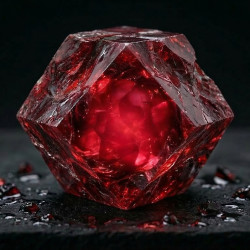
Target the chest cavity to disrupt the mana stone and reduce durability.
Maintain spacing.
Confined environments increase risk exponentially.
Economic Notes
Mana stone yield is mid-range for the first band.
Keys have no reliable commercial value.
Occasional structural relevance exists but is rare.
The primary economic impact is indirect:
A Key Holder alters the navigational integrity of a floor section.
Any area with evidence of prolonged Key Holder activity should be considered structurally compromised.
Connected records